
Collaborative efforts power national roll out of apheresis frozen plasma, psoralen-treated
Tuesday, March 24, 2026 Dr. Aditi Khandelwal
Since 2022, Canadian Blood Services has utilized pathogen inactivation technologies to add an additional layer to safety measures and further reduce risks of bacterial transmission through transfusion of blood products.
Apheresis frozen plasma, psoralen-treated (AFP-PT) is one of the newest blood components manufactured by Canadian Blood Services. This new type of pathogen-inactivated plasma began its national rollout from Canadian Blood Services’ Ottawa distribution site in September 2025 with plans to reach additional sites across Canada continuing into March 2026.
The type of pathogen inactivation used to manufacture AFP-PT was first applied to platelets produced at Canadian Blood Services. Using Cerus INTERCEPT technology, it leverages UV illumination to target and neutralize viruses, bacteria, protozoa and even remaining white blood cells that may be found in the blood products.
AFP-PT has an enhanced safety profile compared to conventional frozen plasma (CPD) and apheresis frozen plasma (ACD-A). This can include a reduction in adverse transfusion reactions because of the way it is manufactured.

An interdisciplinary and collaborative implementation process
Introducing AFP-PT to Canadian hospitals involved the work of numerous interdisciplinary teams at Canadian Blood Services. This process spanned from the initial development of the manufacturing process, led by members of the Canadian Blood Services’ netCAD team, through component validation, obtaining Health Canada approval for this brand-new product, preparing for large-scale manufacturing, and finally integrating AFP-PT into the pre-existing supply chain and logistics system for safe and timely distribution to hospitals.
NetCAD is Canadian Blood Services’ network centre for applied development research. As Anita Howell, netCAD’s associate director describes:
“Whenever we want to introduce something new, we need to focus on minimizing donor impact, strengthening efficiency and resiliency, reducing waste, and ensuring the component meets patient needs.”
NetCAD team member and lead development scientist, Dr. Geraldine Walsh adds:
"To incorporate this pathogen-inactivation technology into our plasma processes, netCAD designed and optimized a process that could be operationalized and generated AFP-PT units made with the optimized process. Then, in collaboration with senior scientist and director of research Dr. Bill Sheffield and his lab, these units were tested to ensure they were of acceptable quality."
These rigorous processes and collaborative efforts help ensure the integration of new products is informed by research and can help Canadian Blood Services deliver on its vision of helping every patient, matching every need, and serving every Canadian.
Health-care and laboratory professionals looking to learn more about this new product can find a variety of resources available on blood.ca and on our professional education website, Profedu.ca, including:
- Canadian Blood Services Circular of Information containing additional product information.
- Two new publications offering resources like downloadable educational slide decks and frequently asked questions:
Canadian Blood Services – Driving world-class innovation
Through discovery, development and applied research, Canadian Blood Services drives world-class innovation in blood transfusion, cellular therapy and transplantation—bringing clarity and insight to an increasingly complex healthcare future. Our dedicated research team and extended network of partners engage in exploratory and applied research to create new knowledge, inform and enhance best practices, contribute to the development of new services and technologies, and build capacity through training and collaboration. Find out more about. our research impact.
The opinions reflected in this post are those of the author and do not necessarily reflect the opinions of Canadian Blood Services nor do they reflect the views of Health Canada or any other funding agency.
Related blog posts
Thursday, March 24, 2022
Dr. Geraldine Walsh
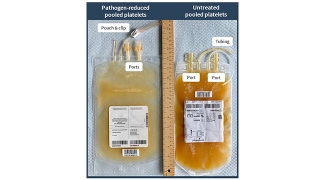
In January 2022, Canadian Blood Services introduced pathogen-reduced platelets, a product that is manufactured using pathogen-inactivation technology, at its Ottawa production site. By effectively damaging the nucleic acids of a number of pathogens, pathogen inactivation further reduces the risk of transfusion-transmitted infections—an especially important safeguard against new or emerging pathogens, or pathogens for which tests are not available.
Friday, March 08, 2019
Dr. Geraldine Walsh
This primer is part I of our new series exploring the future of blood banking. Given that D is also for Development: Canadian Blood Services and the Centre for Innovation have been following the development of pathogen inactivation technologies and how they can be used to improve safety. Read-on to learn more about these technologies and their potential to shift the blood safety paradigm.

Thursday, November 06, 2025
Abby Wolfe
Every day, blood donations are manufactured into the lifesaving blood components that Canadian Blood Services provides to meet patients’ and healthcare systems’ diverse needs. While the Clinical Guide to Transfusion provides information about these components to healthcare providers, this blog describes how research activities happening behind the scenes continuously inform and improve how blood components are collected, manufactured, stored and utilized.