
Journeys in research: Canadian Blood Services’ trainee Dimpy Modi shares her story
Thursday, April 16, 2026 Dr. Dimpy Modi
Congratulations to Dimpy Modi who successfully defended her PhD thesis this month, April 2026. Dr. Modi received a Canadian Blood Services Graduate Fellowship Program award for her research on “Anemia-induced bleeding in thrombocytopenic patients with blood cancer” in 2023.
Through personal reflections, photos, and quotes, this story offers a glimpse into the meaningful contributions of emerging researchers and the value of mentorship, collaboration, and purpose-driven science. Join us in celebrating Dr. Modi’s achievement and Canadian Blood Services trainee experience, described below in her own words.
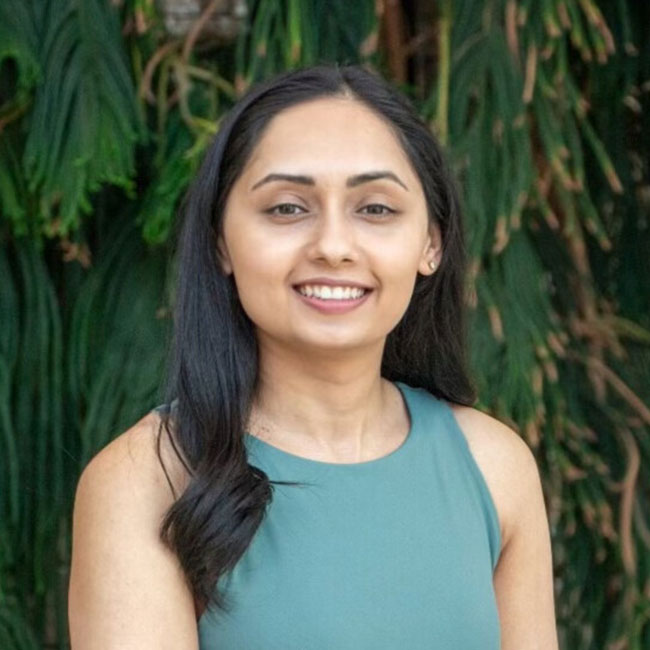
I recently completed my PhD at McMaster University, where I was supervised by Canadian Blood Services’ adjunct scientist Dr. Donald Arnold at the Michael G. DeGroote Centre for Transfusion Research.
My journey into this work began during my time at Sunnybrook, where I was fortunate to be mentored by Dr. Jeannie Callum, who first introduced me to transfusion medicine research. Through her mentorship, I became involved in a COVID-19 multicentre clinical trial and was also introduced to Dr. Donald Arnold. What stayed with me most from that experience was the leadership of the clinical trialists. I admired how they brought investigators together, moved important work forward quickly, and kept the focus on questions that could make a real difference for patients. That experience played a major role in my decision to pursue a PhD.
My research has focused on improving red blood cell (RBC) transfusion support for patients with acute leukemia. At the centre of this work is a clinically important question: how does anemia influence bleeding risk in patients with hematological malignancies? Patients with acute leukemia often experience severe anemia and thrombocytopenia at the same time, and understanding how best to manage this remains an important challenge in patient blood management.
With support from the Canadian Blood Services Fellowship Award and a Canadian Blood Services Intramural Grant, my thesis brought together a broader program of research aimed at addressing this question from different angles. One component was a national survey exploring the perspectives of Canadian leukemia physicians on the design of a transfusion trial comparing higher and lower hemoglobin thresholds. Another was a clinical trial substudy examining how anemia relates to bleeding in thrombocytopenic patients with hematological malignancies. The third was the BAIT study, a pilot randomized trial comparing higher and lower RBC transfusion strategies in patients with acute leukemia. Across these projects, my goal has been to generate evidence that can help improve anemia management and inform transfusion strategies that may ultimately lead to better outcomes for patients.
Throughout my graduate training, I had the opportunity to share this work with the broader transfusion medicine and hematology communities at meetings including the Canadian Transfusion Trials Group, Canadian Blood Services Research Day, the Canadian Society of Transfusion Medicine, and the American Society of Hematology. Presenting this research at national and international meetings was one of the most rewarding parts of my training, because it allowed me to learn from others in the field while also contributing to important conversations about transfusion practice and clinical trial design. Abstracts from the survey study, Red blood cell transfusion thresholds in acute leukemia: Current practice and physician perspectives from a national survey, and substudy, The Association Between Anemia and Bleeding in Thrombocytopenic Patients with a Hematological Malignancy, are now published. The full papers arising from this work, including the pilot protocol, are being prepared for submission to peer-reviewed journals.
I deeply appreciate the support of my collaborators across the wonderful transfusion medicine community and Canadian Blood Services. My research and academic experience were meaningful and effective through their guidance and support.

My research was recognized through several awards during my graduate training. These achievements would not have been possible without the support of my mentors, collaborators, and the broader transfusion medicine community in Canada, including Canadian Blood Services. In 2023, I received the Graduate Student Incentive Award from McMaster’s Department of Medicine for demonstrating a high standard of achievement in my early graduate studies. This was followed in 2024 by the Faculty of Health Sciences Outstanding Achievement Award, which recognizes the top five percent of graduate students for exceptional academic and research performance. In February 2025, I was awarded the Betty Horricks Research Endowment Fund from McMaster University in support of research in bone marrow and blood cancers. Recently in December 2025, I received an ASH Abstract Achievement Award which recognizes trainee investigators with high-scoring annual meeting abstracts.
My graduate studies have strengthened my ability to design and critique clinical research, and more importantly, taught me the value of asking the right questions. I’ve learned how evidence grows from early ideas, to data collection, to changes in practice, and how research can translate into real-world improvements for patients. Being part of this progression firsthand has been incredibly motivating and continues to shape how I approach challenges in transfusion medicine.
Canadian Blood Services – Driving world-class innovation
Through discovery, development and applied research, Canadian Blood Services drives world-class innovation in blood transfusion, cellular therapy and transplantation—bringing clarity and insight to an increasingly complex healthcare future. Our dedicated research team and extended network of partners engage in exploratory and applied research to create new knowledge, inform and enhance best practices, contribute to the development of new services and technologies, and build capacity through training and collaboration. Find out more about our research impact.
The opinions reflected in this post are those of the author and do not necessarily reflect the opinions of Canadian Blood Services nor do they reflect the views of Health Canada or any other funding agency.
Related blog posts

Friday, May 23, 2025
Dimpy Modi
Canadian Blood Services is looking forward to connecting with members of the transfusion community at CSTM 2025, happening this May in St. John's, Newfoundland! In lead-up to the event, we invited members of our research and education network to submit blogs previewing their contributions to CSTM 2025.

Friday, October 31, 2025
Dr. Carina Paredes
This blog series shines a spotlight on the next generation of researchers by featuring trainees who have recently graduated – or those who are soon to graduate – from Canadian Blood Services’ research and education network. Each post celebrates their journey, showcasing their research, experiences, and the impact of their work. In this edition, we highlight Carina Paredes, a recent graduate.

Thursday, December 11, 2025
Aldis Brennan
It’s been an exciting year of stories on the Research, Education, and Discovery (R.E.D.) Blog. Here is a look back at the articles you were most interested in from 2025.