
Meet the Researcher: Perspectives from a trainee of Dr. Ed Pryzdial
Thursday, February 26, 2026 John Perrier
A new “Meet the Researcher” video showcasing the expertise of Canadian Blood Services’ research network is now available on blood.ca! The video features Dr. Ed Pryzdial, a Canadian Blood Services senior scientist and clinical professor in the Centre for Blood research at the University of British Columbia (UBC) in Vancouver. Dr. Pryzdial’s laboratory is located at the Centre for Blood Research (CBR) where a partnership between Canadian Blood Services and CBR is helping to train the next generation of researchers in transfusion science.
As a complement to the video and to highlight the “behind-the-scenes" view on discovery research activities that Dr. Pryzdial and his team undertake, we invited John Perrier to share his perspectives as a trainee pursuing graduate studies with Dr. Pryzdial’s mentorship.

Finding my footing: Perspectives as a trainee of Dr. Ed Pryzdial
Three and a half years ago I made the move across the country to join the Pryzdial lab in Vancouver for my studies at the UBC. Early nervousness was instantly traded for excitement by the friendly, tight-knit environment that Dr. Pryzdial has fostered within our lab and the Centre for Blood Research (CBR).
My research focuses on the intersection between blood clotting proteins and viral infection. This unique area builds on previous work from the lab, which found that when a virus enters a cell and makes copies of itself (infection), it can snatch human proteins and display them on its surface. This has serious implications for disease because, tissue factor (TF), the cellular protein responsible for triggering the clotting cascade, retains its activity when it is relocated to the virus surface.
Not only do these viruses circulate in our bodies with clotting abilities, but they also utilize TF to render cells more susceptible to infection. The finding that TF is associated with all seven types of virus we have studied so far, has cemented it as a prime candidate for broad-spectrum anti-viral development.
Expanding the impact: Tissue factor activity on many viruses
The expertise that Dr. Pryzdial provides on our blood clotting system (haemostasis) has been crucial throughout my training. This involves expanding our knowledge on which viruses contain active TF.
My work has shown that a coronavirus also has typical TF function. In biochemical terms, it acts to accelerate the plasma clotting factor FVIIa-dependent generation of factor Xa, which is the plasma enzyme that is required to produce a clot in blood. Interestingly, my studies have shown that this coronavirus, and also dengue virus, contain a specialized lipid that is required for blood clotting proteins to assemble as part of their activation process. Both viruses can overcome intrinsic plasma inhibitors found in plasma to form a clot. This is a probable basis of their pathology.
To carefully test this idea, I just finished using a gene editing tool, called CRISPR-Cas9, to delete TF from a human cell line, so that viruses can be created that either do or do not have TF on their surface. Stay tuned!

Modifying Factor X:Towards safer thrombolytic alternatives
In addition to understanding how blood clotting proteins are exploited and affect pathology during viral infection, other students and postdocs in our lab are furthering the understanding of how blood clots break down. They are developing safe therapeutic alternatives that assist this process. Tenecteplase is a predominant clot-dissolving drug, used for heart attack and stroke patients. While it is effective, it has the life-threatening risk of bleeding, owing to the high dose that is required and off-target activity.
Our lab has discovered that a version of plasma clotting factor X, can break up clots too. Repurposing factor X as a clot-buster offers a unique advantage because it can avoid the off-target problems of Tenecteplase. By modifying a lab-produced, synthetic version of factor X, so that it is resistant to breakdown and clot formation in blood, our lab has reduced the effective dose of Tenecteplase by 4-fold, thereby completely avoiding indicators of bleeding in pre-clinical trials. Using this modified factor X as a combined therapeutic, it is expected to reduce the bleeding risk that comes with the current clot-dissolving drugs used in the clinic to save lives.
- Watch the full Meet the Researcher video introducing Canadian Blood Services senior scientist Dr. Ed Pryzdial
To continue learning about research and education activities undertaken at Canadian Blood Services, including our competitive funding programs, products and services for researchers, and research team, visit our research webpages on blood.ca.
Canadian Blood Services – Driving world-class innovation
Through discovery, development and applied research, Canadian Blood Services drives world-class innovation in blood transfusion, cellular therapy and transplantation—bringing clarity and insight to an increasingly complex healthcare future. Our dedicated research team and extended network of partners engage in exploratory and applied research to create new knowledge, inform and enhance best practices, contribute to the development of new services and technologies, and build capacity through training and collaboration. Find out more about our research impact.
The opinions reflected in this post are those of the author and do not necessarily reflect the opinions of Canadian Blood Services nor do they reflect the views of Health Canada or any other funding agency.
Related blog posts

Tuesday, July 30, 2024
Kaitlyn Chuong
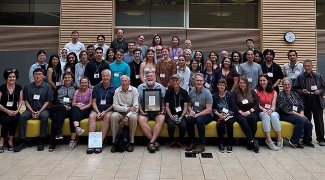
Canadian Blood Services’ partnership with the Centre for Blood Research (CBR) at the University of British Columbia (UBC) has been renewed to 2027 to continue training the next generation of researchers in transfusion science.
Tuesday, August 22, 2023
John Perrier
The Centre for Blood Research (CBR) at the University of British Columbia celebrated its 20-year anniversary on July 7th by inviting CBR alumni to join current members in learning about the beginnings of the centre. Read about the celebration and the history of the centre in this blog reposted from CBR.

Thursday, April 14, 2022
Abby Wolfe
Could clues to the successful treatment of some of the world’s most challenging viral infections come from understanding how viruses interact with our body’s clot-creating proteins? Dr. Ed Pryzdial and his laboratory team at the Centre for Blood Research (CBR) have dedicated research efforts to answering questions like this; efforts that have recently earned funding from the Canadian Institutes of Health Research (CIHR).